
Dodge Charger: STARTING AND OPERATING / REFUELING THE VEHICLE
- Put the vehicle in PARK and switch the ignition off.
- Push near the rear edge and center of the of the fuel filler door to release.
The door will pop open to allow hand access to open the door the rest of the
way.
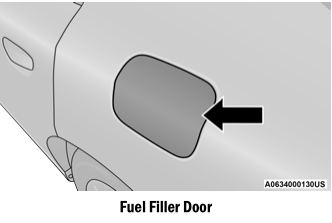
- Open the fuel filler door. https://ecufix.info
NOTE:
In certain cold conditions, ice may prevent the fuel door from opening. If this occurs, lightly push on the fuel door to break the ice buildup.
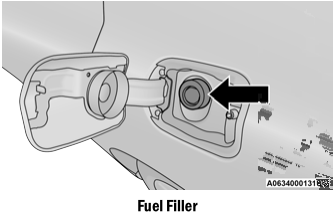
- There is no fuel filler cap. Two flapper doors inside the pipe seal the system.
- Insert the fuel nozzle fully into the filler pipe – the nozzle opens and holds the flapper doors while refueling.
- Fill the vehicle with fuel – when the fuel nozzle “clicks” or shuts off the fuel tank is full.
- Maintain nozzle in filler for five seconds to allow nozzle to drain.
- Remove the fuel nozzle and close the fuel door.
- To close the fuel filler door, push the center-rear edge (three o’clock position) of the fuel filler door then release.
NOTE:
A funnel is provided (located in the trunk in the spare tire area) to open the flapper doors to allow for emergency refueling with a gas can.
WARNING!
- Never have any smoking materials lit in or near the vehicle when the fuel door is open or the tank is being filled.
- Never add fuel when the engine is running. This is in violation of most state and federal fire regulations and may cause the “Malfunction Indicator Light” to turn on.
- A fire may result if fuel is pumped into a portable container that is inside of a vehicle. You could be burned. Always place fuel containers on the ground while filling.
CAUTION!
To avoid fuel spillage and overfilling, do not “top off” the fuel tank after filling.
 PARKVIEW REAR BACK UP CAMERA
The ParkView Rear Back Up Camera allows you to see an on-screen image of the
rear surroundings of your vehicle whenever the gear selector is put into REVERSE...
 VEHICLE LOADING
The load carrying capacity of your vehicle is shown on the “Vehicle Certification
Label”. This information should be used for passenger and luggage loading as indicated...
Other information:
Dodge Charger 2011-2026 Owner's Manual: Launch Control
WARNING! Launch Mode is intended for off-highway or off-road use only and should not be used on any public roadways. It is recommended that this feature be used in a controlled environment, and within the limits of the law. The capabilities of the vehicle as measured by the performance pages must never be exploited in a reckless or dangerous manner, which can jeopardize the user’s safety or the safety of others...
Dodge Charger 2011-2026 Owner's Manual: Safety And General Information
Safety Guidelines WARNING! ALWAYS drive safely with your hands on the steering wheel. You have full responsibility and assume all risks related to the use of the Uconnect features and applications in this vehicle. Only use Uconnect when it is safe to do so...
Categories
- Manuals Home
- Dodge Charger Owners Manual
- Dodge Charger Service Manual
- High/Low Beam Switch, Automatic High Beam — If Equipped
- Service Tire Pressure System Warning
- Power Adjustment (Front Seats) — If Equipped
- New on site
- Most important about car
Manual Door Locks
The power door locks can be manually locked from inside the vehicle by using the door lock knob. To lock each door, push the door lock knob on each door trim panel downward. To unlock the front doors, pull the inside door handle to the first detent. To unlock the rear doors, pull the door lock knob on the door trim panel upward. If the lock knob is down when the door is closed, the door will lock.
