Dodge Charger: OCCUPANT RESTRAINT SYSTEMS / Event Data Recorder (EDR)
This vehicle is equipped with an event data recorder (EDR). The main purpose of an EDR is to record, in certain crash or near crash-like situations, such as an air bag deployment or hitting a road obstacle, data that will assist in understanding how a vehicle’s systems performed. The EDR is designed to record data related to vehicle dynamics and safety systems for a short period of time, typically 30 seconds or less. The EDR in this vehicle is designed to record such data as:
- How various systems in your vehicle were operating;
- Whether or not the driver and passenger safety belts were buckled/fastened;
- How far (if at all) the driver was depressing the accelerator and/or brake pedal; and,
- How fast the vehicle was traveling.
These data can help provide a better understanding of the circumstances in which crashes and injuries occur.
NOTE:
EDR data are recorded by your vehicle only if a non-trivial crash situation occurs; no data are recorded by the EDR under normal driving conditions and no personal data (e.g., name, gender, age, and crash location) are recorded. However, other parties, such as law enforcement, could combine the EDR data with the type of personally identifying data routinely acquired during a crash investigation.
To read data recorded by an EDR, special equipment is required, and access to the vehicle or the EDR is needed. In addition to the vehicle manufacturer, other parties, such as law enforcement, that have the special equipment, can read the information if they have access to the vehicle or the EDR.
 Maintaining Your Air Bag System
WARNING!
Modifications to any part of the air bag system could cause it to
fail when you need it. You could be injured if the air bag system is not there
to protect you...
 Child Restraints
Everyone in your vehicle needs to be buckled up at all times, including babies
and children. Every state in the United States, and every Canadian province, requires
that small children ride in proper restraint systems...
Other information:
Dodge Charger 2011-2026 Owner's Manual: RECREATIONAL TOWING (BEHIND MOTORHOME)
Recreational towing (with all four wheels on the ground, or using a tow dolly) is NOT ALLOWED. The only acceptable method for towing this vehicle (behind another vehicle) is on a vehicle trailer with all four wheels OFF the ground. CAUTION! Towing this vehicle in violation of the above requirements can cause severe transmission and/or transfer case damage...
Dodge Charger 2011-2026 Owner's Manual: 3.6L Engine and 5.7L Engine
3.6L Engine This engine is designed to meet all emissions regulations and provide excellent fuel economy and performance when using high-quality unleaded “regular” gasoline having an octane rating of 87 as specified by the (R+M)/ 2 method...
Categories
- Manuals Home
- Dodge Charger Owners Manual
- Dodge Charger Service Manual
- Launch Control
- Service Tire Pressure System Warning
- Blind Spot Monitoring (BSM) — If Equipped
- New on site
- Most important about car
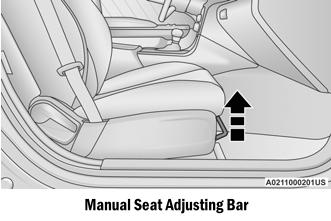
Manual Front Seat Forward/Rearward Adjustment
Some models may be equipped with a manual front passenger seat. The seat can be adjusted forward or rearward by using a bar located by the front of the seat cushion, near the floor.